Florida's high-speed rail line is filing for Ch. 11 bankruptcy protection
Published in Business News
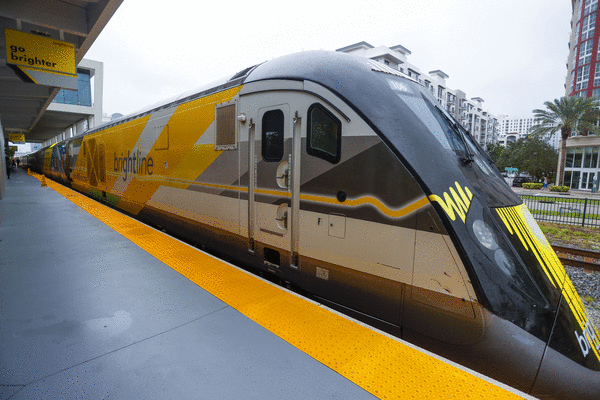
Some parent companies of Brightline, the high-speed rail line that promised to connect Orlando to Tampa, will soon file for Chapter 11 bankruptcy protection.
The Miami-based rail service covers areas of South and Central Florida, including a trip from Orlando to Miami. The filing is part of the company’s effort to restructure about $5.5 billion in corporate debt, the Wall Street Journal reported this week.
The bankruptcy filing will not include the service’s operating units, meaning trains will remain in use during the restructuring. The rights to expand the service to Tampa also remain in place - but a timeline of when that could move forward is unknown.
A spokesperson with Brightline declined to comment for this story.
The restructuring will allow Brightline to lower its debt and improve liquidity, according to a news release. The company also secured $490 million from its investors as part of the negotiations. Seventeen of Brightline’s parent companies are part of the filing. It’s unclear how many companies in total share an ownership stake in Brightline.
Johnny Wong, executive director of Hillsborough’s transportation planning organization, said the news doesn’t jeopardize the Tampa expansion project but “creates uncertainty.” Another rail company could take up the project, he said.
Wong said communications with Brightline have been limited though his team has shared recommendations for where a station could go in Tampa. But there is no “urgency to deliver the service” and the organization will be tracking any provider’s financial viability.
“We need to be confident that at some point in time that the public will get a return on their investment,” he said.
Even before the rumors of a bankruptcy filing began, the Tampa expansion was still years away. Wong said construction for the tracks can’t start until the Florida Department of Transportation completes roadwork projects along Interstate 4.
Not much money has been poured into the project by the Hillsborough planning organization, he said, besides a study completed last year focused on where to place a station.
Reports of the privately-owned company’s financial woes are not new. Earlier this year, an outside auditor found that Brightline “does not currently have the liquid funds necessary to service its debt and meet such other obligations as they become due.”
The rail service’s ridership numbers have historically lagged behind predicted goals. About 2.3 million riders traveled on Brightline from January to August, which is less than half of what the company forecasted, according to a 2024 bond offering document.
Brightline Florida CEO Patrick Goddard said the additional financing secured in negotiations will “be a catalyst for further growth in ridership and revenue.”
“Brightline is a critical part of Florida’s transportation network that has changed the way people move around the state. Today’s agreement brings $490 million in new long-term capital to Brightline from the stakeholders who know this business, and it comes at a time of real momentum,” Goddard said in the company’s announcement.
In August, more than 262,000 passengers traveled on the Brightline rail, which spans 235 miles, according to the company’s latest ridership report.
Residents need more transit options, said Joshua Cascio, a spokesperson for the city of Tampa’s Infrastructure and Mobility department, in a statement. The city had been “looking forward” to having a Brightline station to fill that need.
“We’re hopeful Brightline can work through its challenges and that, ultimately, we’ll still see that Tampa connection become a reality,” Cascio said.
©2026 Tampa Bay Times. Visit at tampabay.com. Distributed by Tribune Content Agency, LLC.










Comments