US tariffs on Canada go into effect, prompting retaliation
Published in Business News
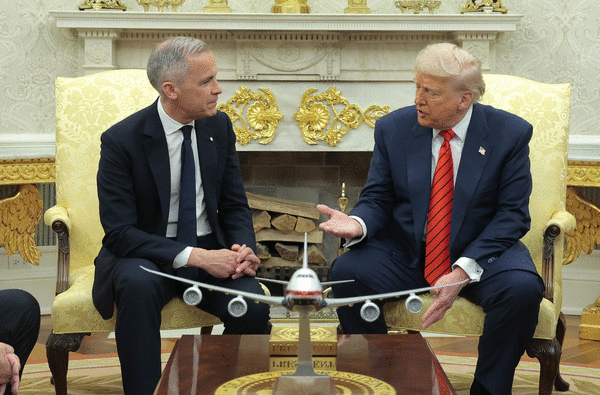
WASHINGTON — U.S.-Canada trade talks fell apart at the last minute, with fresh 50% tariffs on billions of dollars of Canadian goods taking effect and prompting Prime Minister Mark Carney to vow to retaliate “dollar for dollar.”
The tariffs will kick in on hundreds of items the U..S buys from Canada, such as plywood, liquor, electrical equipment and hockey gear, totaling around $20 billion. Carney said his country would match the tariffs “dollar for dollar to protect our workers and businesses.”
The two sides blamed each other for the collapse. U.S. Trade Representative Jamieson Greer said the Canadian negotiators 11th-hours demands had upset the balance worked out over days of negotiations.
“Despite the U.S. offer to Canada to receive the best treatment of any major exporter to our market, new demand and walkbacks of other commitments by Canada have upended the careful balance reached in the past days,” Greer said in a statement.
Carney, meanwhile, argued that it was the U.S. that had changed its position, saying “last-minute changes in the U.S. proposed terms were unfair, uneconomic, and called into question the reliability of any deal.”
The failure to reach an accord dials up the tension between two longtime allies that conducted almost $900 billion of trade in goods and services last year. In addition to tariffs, President Donald Trump has publicly mused about making Canada a U.S. state, referred to its prime ministers as “governor” and claimed the country couldn’t survive without the US.
It underscored how Trump appeared to get ahead of himself on Tuesday night, when he announced less than two hours before the tariffs were originally set to go into effect that the two sides had a deal. Canadian officials later said important elements still needed to be worked out.
“While I’m hoping more will come out on what happened and where we go from here, this is deeply troubling for thousands of small Canadian exporters,” said Dan Kelly, head of the Canadian Federation of Independent Businesses.
The two sides had been discussing a draft deal that included lowering tariffs on certain Canadian steel and aluminum to 25% and cutting duties on Canadian autos to 15%.
In exchange, Canada was to remove retaliatory measures implemented last year after Trump launched the trade war. The White House had been seeking a series of concessions, including scrapping Canada’s counter-tariffs on American vehicles and ending the ban on the retail sale of U.S. alcoholic beverages in most provinces.
The new 50% tariffs are being imposed under a never-before-used provision of the Tariff Act of 1930 that gives the president the power to put duties on countries deemed to discriminate against U.S. commerce. All told, the items on the tariff list represent about $20 billion of Canadian exports to the U.S.
But the new levies won’t apply to the most important natural resources the U.S. imports from Canada, such as oil, potash and critical minerals. Canada is the U.S.’s most important foreign supplier of crude oil and petroleum products — more than 4 million barrels a day.
Public opinion polls in Canada show broad support for fighting back against Trump’s tariffs, and officials in Ottawa have been studying a series of options, according to people familiar with the matter.
Carney earlier ruled out curbing the supply of important natural resources to the U.S. “Being a reliable supplier is important,” he told reporters in late July, shortly after the Trump administration first threatened the 50% tariffs.
(Mathieu Dion, Derek Wallbank and Laura Curtis contributed to this report.)
©2026 Bloomberg L.P. Visit bloomberg.com. Distributed by Tribune Content Agency, LLC.









Comments