Uber exits Serve Robotics stake as delivery alliance unravels
Published in Business News
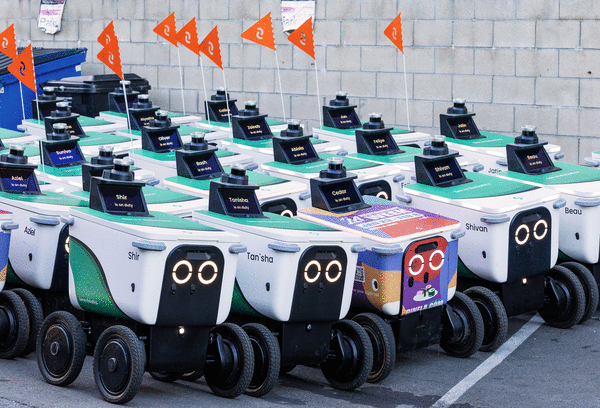
Uber Technologies Inc. has divested from long-time partner Serve Robotics Inc. as the two companies clash over how to deploy delivery robots, the latest setback in Uber’s push to facilitate autonomous services on its platform.
Serve, which makes the doe-eyed, four-wheeled boxy robots roaming the sidewalks in cities like Los Angeles, Miami and Chicago, has counted Uber as an investor since it was spun out of Postmates, the delivery app acquired by the rideshare giant in 2020.
Uber had been reducing its stake in Serve since at least early 2025, while increasing investments into other companies that aligned with its long-term bets, including robotaxis. Uber disclosed in a regulatory filing on Friday that it exited its position in Serve during the second quarter, the same period when an Uber executive resigned from Serve’s board. At the time, Serve said the resignation did not stem from any disagreements with the company.
The development underscores growing challenges in Uber’s bid to become a platform for aggregating autonomous vehicles and robots on its ride-hailing and delivery platform. Working with partners requires delicate negotiations around ownership of the customer relationship and responsibility for the user experience, which could take years of collaboration to smooth out. Last month, Uber said its exclusive arrangement with robotaxi provider Waymo is coming to an end in early 2028, as the Alphabet Inc. company wants to offer rides in more markets through its own ride-hailing app.
Uber’s argument in pursuing a partnership approach, as opposed to building its own autonomous vehicles, is that it would be more efficient to team up with, and in many cases invest in, companies developing robotaxis, sidewalk robots, drones and infrastructure like charging stalls. But there isn’t yet a proven business model to commercialize the nascent technology. Uber has said it is willing to take on some loss as it expands the new services over the next few years.
Uber’s disclosure about its Serve divestment came one day after Serve Chief Executive Officer Ali Kashani told investors on an earnings call that his company doesn’t intend to renew its agreement with Uber after it expires in early 2027. Quarterly delivery volumes through Uber had declined for the first time since the companies’ multicity partnership began in 2022. That led Serve to more than halve its full-year revenue outlook.
“Our extensive discussions with Uber since the emergence of this trend in Q2 have clarified that we really have differing views about the operating model to scale our shared autonomous fleet,” Kashani said on the call, adding that those differences span areas like fleet coordination and merchant integration.
He said that Serve’s experience with different partners, which include Uber’s rival DoorDash Inc., “shows that having alignment on integration and operating models can really produce better outcomes from the same underlying technology and fleet.”
Kashani also told investors last week that the company’s decision to wind down the Uber relationship was made “very recently.” An Uber spokesperson declined to comment on whether the company is renewing its partnership with Serve. In private, Uber and Serve have blamed each other for operational issues.
Uber offered fewer orders to Serve in the second quarter compared with the first, according to people familiar with the matter, who asked not to be identified discussing sensitive internal discussions.
Because of the low offer volume, Serve could not justify the economics to expand its fleet further, one of the people said.
During the period, Serve’s number of daily active robots declined for the first time to 792 from 812 in the prior quarter, according to corporate filings. As a result, the number of hours that its robots were ready to accept offers and perform deliveries fell 4.7% sequentially, the filings show.
Uber raised concerns about Serve’s operational performance and reliability as it expanded to new markets this year, which affected the volume they were able to receive and how many orders they could complete, said one of the people. In one instance, a Serve robot crashed into a Chicago bus stop, sparking viral headlines.
Serve has declined deliveries if it is unable to complete them within customers’ expected arrival time, one of the people said. Serve shares its robots’ ETAs with Uber, but Uber historically has not displayed them accurately to customers, resulting in insufficient time for the robots to fulfill orders, the person said.
Uber’s divestiture of Serve leaves the company with four other robot providers: Sam Altman-backed Coco Robotics, Nebius Group NV-backed Avride, Starship Technologies Inc. and Cartken.
The Uber spokesperson said the company remains committed to offering autonomous delivery, alongside partners that also include drone maker Flytrex. It ended a delivery pilot program with Waymo in Phoenix last May.
“We will keep working closely with a growing number of partners to deliver the convenience and reliability that our customers expect,” the Uber spokesperson said.
Serve, for its part, began diversifying its business beyond sidewalk deliveries earlier this year by acquiring Diligent Robotics Inc., which develops indoor robots to assist hospital staff.
Kashani told investors on last week’s earnings call that he values the Uber partnership, and that Serve continues to “engage with Uber” and is “open to finding a path to continue working together.”
Ultimately, though, he said, “we need to focus our resources where we see the clearest path to high utilization and operational leverage.”
©2026 Bloomberg L.P. Visit bloomberg.com. Distributed by Tribune Content Agency, LLC.










Comments