Casey Williams: Fed by memories of summer road trips long past, nostalgia for station wagons endures
Published in Business News
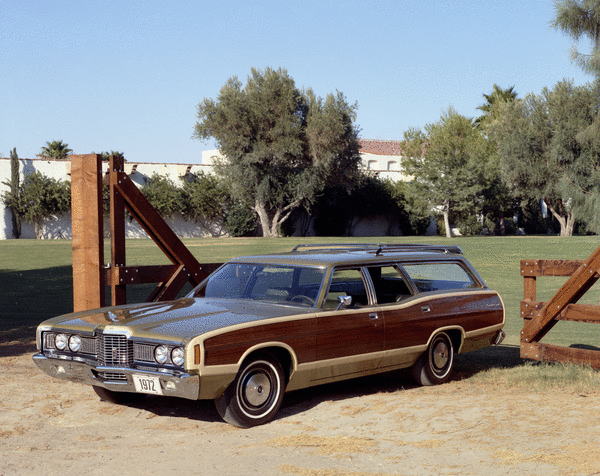
My earliest memory is sitting on the front bench seat of my parents’ Pinehurst Green 1972 Oldsmobile Vista Cruiser wagon. A typical American family, we went on to own a Chevy Blazer and a 1980 Oldsmobile Cutlass diesel wagon — woodgrain and all.
It's no surprise these vehicles became enduring American icons, says Richard Ratay, author of the memoir "Don’t Make Me Pull Over! An Informal History of the Family Road Trip." “They could accommodate large families with rows of bench seats including those great rear-facing pop-up seats! So many of us have fond memories of the road trips we took in them with our parents and siblings.”
Yet their genesis took decades to be stitched into our national psyche. “They started out as cargo-haulers for transporting passengers to train stations,” Ratay says. “In the 1920s and '30s they transformed into ‘estate cars’ with beautifully crafted wood bodies. In the '60s, they became the beloved ‘woodies,’ enlisted by surfers. And finally, in the 1970s, they served as the trusted four-wheeled trams that ferried families across America.”
He fondly remembers his family’s 1972 Ford Country Squire wagon with its simulated woodgrain bodysides, rear-facing third row and Magic Doorgate tailgate that folded down for picnics.
Chevrolet’s downsized 1977 Caprice Classic won Motor Trend Car of the Year, and in 1983, one replaced my family’s Cutlass.
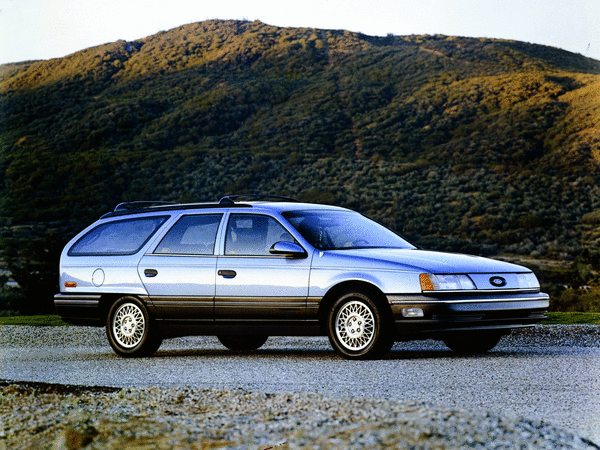
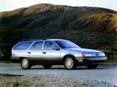
I may have been bobbing in that Chevy when I first saw photos of the 1986 Ford Taurus wagon's sleek aerodynamics. One was memorably launched into a tree farm in 1989’s "National Lampoon's Christmas Vacation." Minutes later, it hauled evergreen bounty on its roof.
About then, Subaru borrowed a page from the AMC Eagle, jacked its Legacy wagon, and hired Paul Hogan of "Crocodile Dundee" fame as its pitchman. The Outback virtually created crossovers.
Volvo, whose station wagons inspired fervent devotion for decades, took the evolution further, introducing the notion that the humble family vehicle could achieve sports-car performance. A memorable late 1980s print ad posed its Turbo Wagon next to a Lamborghini Countach towing a trailer.
Alas, Volvo recently killed its remaining long-backs. Or maybe not, as Volvo's CEO Hakan Samuelsson recently said: "Probably the U.S. consumers know better, but I think we believe that the market may have gone a bit too far into a single SUV market. I don't think 10 years from now, we will only have SUVs from Volvo."
There’s hope.
“The immediate outlook for wagons is bleak,” says Ivan Drury, director of insights at Edmunds. “While the wagon was once seen as point A to point B transportation with an emphasis on practicality, the last iterations have typically been more focused on high performance.”
Even in 1970, cool dads could own a Chevrolet Kingswood Estate with a 454 V-8. By the 1980s, we had Mercedes AMG Hammers eating Ferraris, but true wagon debauchery began with the 2006 Dodge Magnum SRT8’s 425 horsepower HEMI V-8.
Cadillac answered with the 2011 CTS-V Wagon packing a 556-horsepower supercharged V-8, Magnetic Ride Control and optional six-speed manual transmission — essentially a Corvette for the family-set. It ran 0-60 in 4 seconds and touched 190 mph!
There are even better wagons today. Take the Audi RS 6 Avant with its 621-horsepower twin-turbo V-8 that sounds like rapture and clocks 0-60 mph in 3.3 seconds. Or maybe the BMW M5 Touring with 717-horsepower twin-turbo V-8 hybrid that clicks 0-60 in 3.5 seconds. Both look like grocery fetchers for Darth Vader’s nanny, costing $130k.
Mercedes offers the E450 All-Terrain and AMG E53 Hybrid Wagon from $78,300. The former rides on an air suspension that raises for off-roading and channels its 375-horsepower turbocharged inline-six. The latter adds a plug-in hybrid for 577 horsepower, does 0-60 in 3.8 seconds and has 41 miles electric range.
What could make wagons more desirable in today's car market?
“Embrace the basic tenets of a wagon without muddling it with crossover compromises,” Drury says. “The design can be more road-focused. Automakers were aware that wagons were resonating with the enthusiast crowd and offered them in some of the most over-the-top configurations.”
Yet we still have nostalgia surfaced by "The Way Way Back" (2013), which showcased a 1970 Buick Estate wagon as the setting for the awkward teenage protagonist's conflict with his mother’s boyfriend.
We all have wagon stories.
“My favorite family road trip would have to be our pilgrimage to Disney World in, I think, 1976, when I was eight years old,” Ratay says. “We took our Country Squire, which meant I had the whole rear cargo area to myself. I was too chicken to go on (Space Mountain) but my older brothers rode it over and over again.”
It couldn’t last forever. In 1987 my parents bought a Chevy Astro minivan with quad captain’s chairs, which ended my backseat skirmishes with my sister. The genre coined by Chrysler in 1983 begat the car-based crossovers that today’s families covet. But, that’s so fogeyish.
“Sometimes buyers don’t want the same thing as everyone else — especially if (it) is something their parents had,” Drury says. “I think a lot of the enthusiast preference for wagons is rooted in the design once being seen as uncool.”
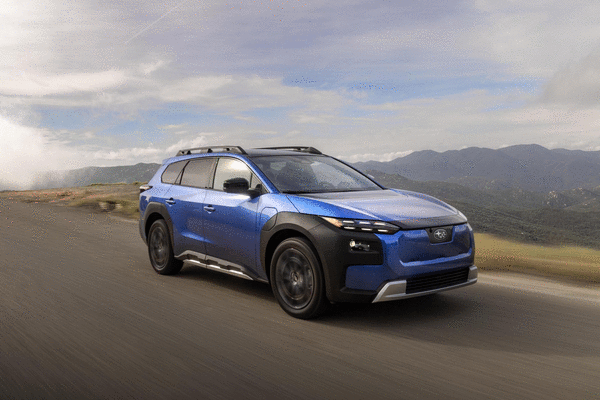
That's probably true. My family has a 2022 Outback Wilderness with 9.5 inches of ground clearance, turbo-four and all-wheel-drive that out-accelerates 1980s Corvettes — nothing like my parents’ Caprice. The redesigned 2026 edition shares architecture and powertrains, but traded its wagon profile for squared forms. Not everybody’s pleased.
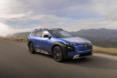
No matter, because the future belongs to all-electric wagons like the 2026 Subaru Trailseeker and Toyota bZ Woodland that look futuristically rugged while offering 280 miles range and 4.4-second 0-60 sprints for under $40,000.
Nostalgia persists.
“I’d love to get my hands on a classic ‘80s Mercedes-Benz wagon,” Drury says. “I think a drive from San Diego to Seattle with my wife, our cat and a list of places we haven’t eaten at for years would be pretty ideal.”
In "National Lampoon’s Vacation," which traced the Griswold family's trek from Chicago to Wally World, the star was the pea green Wagon Queen Family Truckster they took. Maybe you need a similar adventure.
“Go. Now,” Ratay said. “Get off the Interstate. Stop at landmarks and oddball museums and Civil War battlefields and read the plaques — together with your kids. Eat at family-run restaurants. Family road trips are not about the destinations. They’re about the experiences you share along the way.”
©2026 Tribune Content Agency, LLC










Comments