Funko accused of collecting user data without permission
Published in Business News
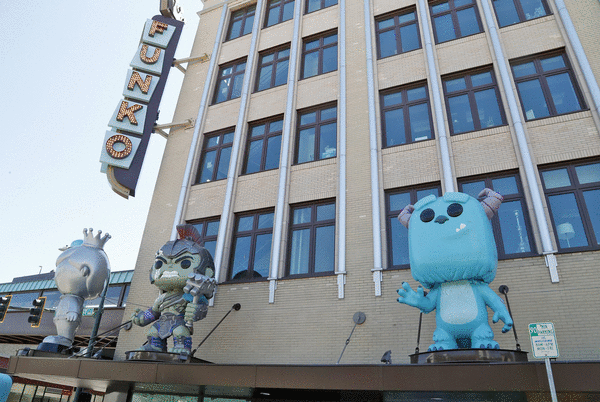
A new lawsuit accuses Funko, the Everett, Washington-based pop culture collectibles brand, of collecting and selling users’ data without permission.
Funko sells officially licensed collectibles, apparel, accessories and other merchandise related to popular franchises, including Star Wars, Disney and Marvel. The company is most known for its bobbleheads of iconic characters, which have exploded in popularity.
The figurines, called Funko Pop!, are sold online and in stores. They have die-hard fans who want to showcase their fandom allegiances.
But California resident Peter Dirksen claims Funko is unlawfully deploying third-party tracking software without permission when those fans visit the Funko website to shop.
Dirksen filed a lawsuit against Funko in the U.S. District Court for the Western District of Washington in Seattle on Friday, claiming the company’s data tracking practices violate the federal Wiretap Act and a series of California state consumer protection and privacy laws.
He claims Funko deployed third-party tracking tools that intercepted, recorded and transmitted his data even though he clicked “reject all” cookies.
“When a company affirmatively represents that users may control whether their data is sold, shared, or tracked, but then secretly sells, shares, and tracks that data anyway, the misconduct is especially egregious,” Dirksen’s attorneys wrote in the complaint.
Funko did not immediately respond to a request for comment.
The case seeks class action status to include Funko website users who may have had their data shared without their permission.
A bar with internet “cookie” preferences pops up when users enter Funko’s website, asking for permission to collect users’ data “to enhance site navigation, analyze site usage, and assist in our marketing efforts.”
Dirksen’s attorneys, with the Seattle-based law firm Tousley Brain Stephens and New York-based law firm Levi & Korsinsky, argue the site starts using cookies and other tracking tools even before they have a chance to “reject all” cookies.
Clicking “reject all” cookies doesn’t make a difference, the attorneys claim.
“Indeed, even after users rejected non-essential Tracking Tools and selected only strictly necessary cookies, Defendant continued deploying Tracking Tools by, at a minimum, Facebook, Google, and Salesforce,” the attorneys wrote.
©2026 The Seattle Times. Visit seattletimes.com. Distributed by Tribune Content Agency, LLC.










Comments